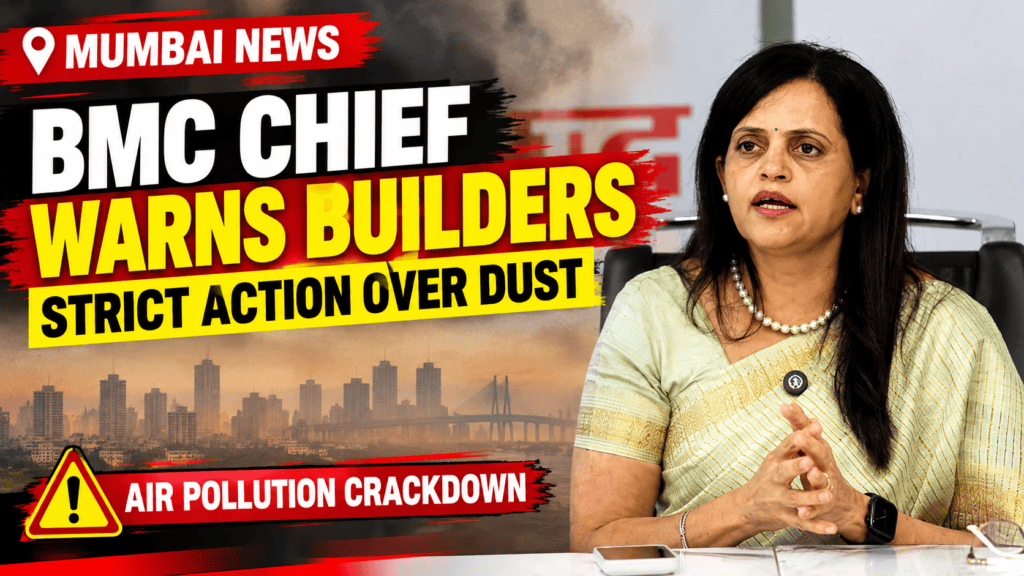
Mumbai air pollution has become a growing concern as construction and infrastructure activities continue across the city ahead of the winter season. The Brihanmumbai Municipal Corporation (BMC), under Municipal Commissioner Ashwini Bhide, is tightening enforcement of dust-control rules at construction and demolition sites to prevent a deterioration in air quality.
The civic body has strengthened inspections and reiterated the importance of following its 28-point air pollution mitigation guidelines. Construction sites that fail to implement the required pollution-control measures may face show-cause notices, stop-work orders and other enforcement action, depending on the nature of the violation.
The renewed focus comes as Mumbai prepares for the post-monsoon and winter months, when changing weather conditions can make it more difficult for airborne pollutants to disperse. Construction dust, road dust, vehicle emissions and waste burning remain among the sources that authorities are monitoring.
BMC Tightens Action Against Construction Dust in Mumbai
Construction and redevelopment projects are a familiar sight across Mumbai, from residential buildings and commercial complexes to major infrastructure developments. However, demolition, excavation, transportation of building materials and debris handling can release significant amounts of dust into the surrounding environment if proper precautions are not taken.
The BMC has reiterated that developers and contractors must follow prescribed dust-control measures throughout construction and demolition activities.
According to a report published by Mid-Day on October 22, 2026, the civic body has outlined its 28-point guidelines and deployed 76 ward-level mitigation squads to inspect construction sites and take action against violations.
These squads conduct random and surprise inspections, with each team required to inspect at least two construction sites daily. The objective is to identify non-compliant projects and ensure that corrective measures are implemented without unnecessary delays.
The enforcement drive places construction companies, developers and contractors under greater scrutiny as Mumbai approaches the winter pollution season.
What Are the BMC’s Dust-Control Rules for Builders?
The BMC’s pollution-control guidelines specify several measures intended to prevent construction dust from spreading into nearby residential areas, roads and public spaces.
Construction sites must be properly enclosed using green cloth, jute sheets or tarpaulin, as applicable. Demolition structures must be covered from top to bottom, and continuous water spraying is required during demolition to reduce airborne dust.
The guidelines also prescribe minimum barricading heights for certain large construction projects. Projects exceeding 70 metres in height and those meeting specified site-area criteria are subject to additional barricading requirements.
Developers must use water sprinklers or fogging systems during dust-generating activities, including the handling, loading and unloading of construction materials.
Activities such as cutting, drilling, grinding and sawing must also be carried out with suitable dust-control arrangements.
These requirements are intended to reduce particulate matter released into the air and limit the impact of construction activities on people living or working near project sites.
Air Quality Monitoring at Construction Sites
Another important component of Mumbai’s pollution-control strategy is the monitoring of air quality around construction projects.
The BMC’s guidelines require sensor-based air pollution monitoring at construction sites, along with appropriate action when pollution levels exceed prescribed limits.
Monitoring data can help civic officials identify problem locations and assess whether dust-control measures are working effectively.
The guidelines also provide for CCTV monitoring and checks on vehicles leaving construction sites. These measures can help authorities verify whether vehicle tyres are cleaned before vehicles enter public roads and whether construction materials are transported safely.
Trucks carrying sand, soil, debris and other construction materials must be adequately covered to prevent dust from escaping during transportation. Overloading must also be avoided.
Developers and contractors are expected to ensure that construction waste is handled and transported according to applicable requirements.
BMC Inspections May Lead to Stop-Work Notices
The civic administration has made it clear that construction sites cannot ignore prescribed environmental safeguards.
Depending on the findings of an inspection, authorities may issue show-cause notices, direct developers to correct violations or issue stop-work notices where warranted. Further action, including sealing of premises, may be considered under the applicable enforcement framework.
A report published by Hindustan Times on October 21, 2026, highlighted enforcement action against construction sites in Mumbai, including a demolition site in Andheri where work was halted over dust-control violations.
Such measures demonstrate why compliance is important for developers, contractors and project managers operating in the city.
However, the action taken in each case depends on the applicable rules, the inspection findings and the nature of the violation. Not every construction project is automatically subject to a shutdown.
Road Dust and Construction Debris Also Under Scrutiny
Construction sites are not the only focus of Mumbai’s air pollution-control efforts. Dust accumulated on roads, debris dumped in unauthorised locations and material spilled during transportation can also contribute to local pollution.
The BMC has included road cleaning, water sprinkling and dust removal among its broader pollution-control measures.
In September, Ashwini Bhide directed civic officials to prepare for a special air pollution-control campaign from October 1 to October 15. The measures included road washing, covering major construction sites and appointing nodal officers to monitor large projects.
The campaign was intended to prevent air quality from deteriorating as the monsoon season ended.
The civic administration has also emphasised the need to address complaints from residents and improve monitoring of locations affected by construction activities and traffic congestion.
For developers, this means that keeping a construction site clean is not enough on its own. They must also take appropriate steps to prevent dust from escaping the site and affecting surrounding roads and neighbourhoods.
Why Mumbai’s Air Pollution Could Worsen During Winter
Air pollution can become more difficult to manage during the winter months because atmospheric conditions may limit the dispersion of pollutants. Reduced rainfall after the monsoon can also allow road dust and other particles to accumulate.
Mumbai’s expanding construction activity adds to the challenge, particularly in areas where redevelopment projects, excavation work and heavy traffic operate close to residential buildings.
Exposure to polluted air can aggravate respiratory symptoms and pose particular risks to children, older people and individuals with existing respiratory or cardiovascular conditions.
This makes preventive action important, rather than waiting for air quality to deteriorate significantly before responding.
The BMC’s enforcement measures are intended to reduce avoidable emissions and encourage developers to follow pollution-control requirements throughout the construction process.
Maharashtra Minister Calls for a Weekly Construction Break
The debate over Mumbai’s air pollution intensified further on October 26, 2026, when Maharashtra minister and Mumbai Suburban Guardian Minister Ashish Shelar proposed suspending construction and demolition activities across the city for one day every week.
According to reports published by Hindustan Times and the Free Press Journal, Shelar wrote to BMC Commissioner Ashwini Bhide seeking stronger measures to address worsening air quality ahead of winter.
His proposals included a city-specific pollution-response plan, road washing, stricter vehicle-emission checks and additional measures at pollution hotspots.
The proposed weekly pause is a recommendation, not confirmation that a citywide construction shutdown has been implemented. Any final decision would depend on the authorities concerned and the measures formally adopted.
The proposal nevertheless highlights the growing pressure on civic authorities to address pollution from multiple sources.
What Builders and Residents Should Expect Next
The BMC’s stricter inspections are likely to keep construction-site compliance in focus as Mumbai enters the winter pollution season.
Developers and contractors should ensure that their sites have appropriate barricading, dust suppression, covered material transport and waste-management arrangements. They should also respond promptly to inspection findings and comply with directions issued by the competent authorities.
Residents living near construction projects can help improve accountability by reporting visible dust emissions, uncovered debris transportation or other suspected violations through the civic body’s official complaint channels.
The effectiveness of these measures will depend on consistent enforcement, accurate monitoring and cooperation among developers, contractors, civic officials and residents.
Mumbai’s air pollution challenge cannot be resolved through construction-site inspections alone. Road dust, vehicle emissions, waste burning and other pollution sources also require sustained attention.
As the winter season approaches, the key question will be whether stronger monitoring and enforcement can prevent a significant deterioration in the city’s air quality while allowing essential development work to continue under appropriate environmental safeguards.
For now, the BMC’s message to the construction sector is clear: dust-control requirements must be taken seriously, and violations can invite enforcement action.