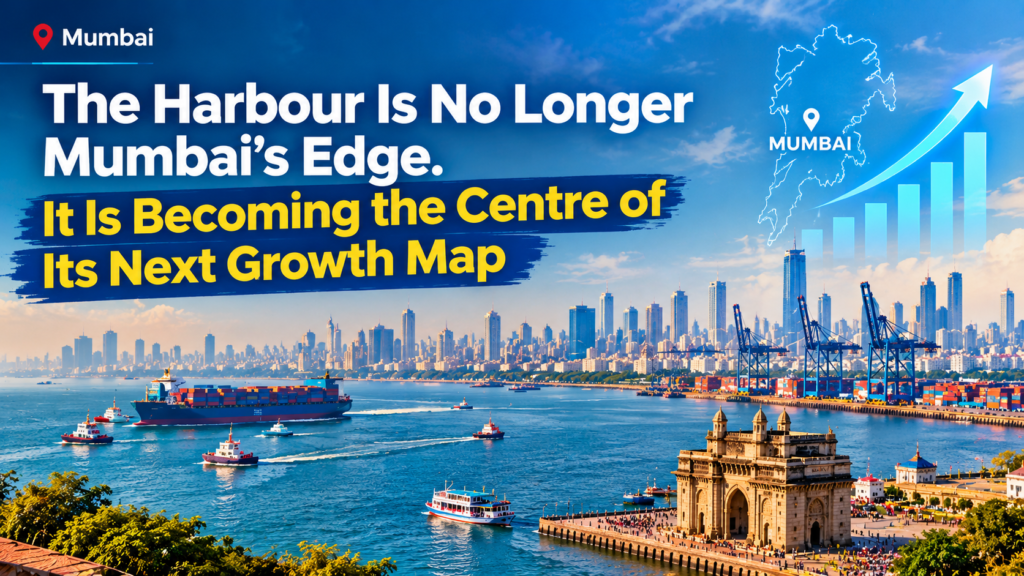
Mumbai’s next chapter of urban development is increasingly taking shape around its eastern waterfront, harbour crossings and the expanding network of transport links connecting the city with Navi Mumbai and the wider Mumbai Metropolitan Region (MMR). For decades, the harbour was often viewed as the edge of the city, separating established business districts from emerging residential and commercial centres. Today, that perception is changing.
Major infrastructure projects, improved regional connectivity, new residential developments and the growing importance of Navi Mumbai are reshaping how people understand Mumbai’s geography. Areas once considered distant from the traditional city centre are gaining attention as potential destinations for businesses, homebuyers, investors and commuters.
The transformation is about more than new roads or bridges. It reflects a wider change in Mumbai’s growth pattern, with economic activity, housing demand and employment opportunities increasingly spreading across the metropolitan region.
Mumbai’s Harbour Is Becoming a Growth Corridor
Mumbai has historically developed around its island geography, with South Mumbai, the central business districts and the western suburbs attracting significant commercial and residential activity. However, limited land availability, high property prices and increasing pressure on existing infrastructure have encouraged development to expand beyond traditional locations.
The eastern side of Mumbai and the areas across the harbour offer opportunities for this next phase of urban growth. Improved transport connections can make previously less accessible locations more attractive for housing, offices, logistics, retail and other commercial activities.
The harbour is therefore becoming more than a geographical boundary. It is increasingly part of a wider economic corridor connecting established parts of Mumbai with emerging urban centres.
This shift could gradually influence where people choose to live, where businesses establish offices and how daily commuting patterns evolve across the region.
Mumbai Trans Harbour Link Changes Regional Connectivity
One of the most important infrastructure developments in this transformation is the Mumbai Trans Harbour Link, officially known as Atal Bihari Vajpayee Sewri–Nhava Sheva Atal Setu.
The approximately 21.8-kilometre sea bridge connects Sewri in Mumbai with the Nhava Sheva area near Navi Mumbai. Opened to traffic in January 2024, it was designed to improve connectivity between Mumbai and areas across the harbour.
The bridge has strengthened the transport connection between the island city and the eastern side of the metropolitan region. It also offers an important route for people travelling towards Navi Mumbai and areas connected to its wider road network.
Better connectivity can influence real estate demand, business location decisions and the movement of goods. However, the scale of these effects depends on several factors, including access roads, public transport options, employment opportunities and the pace of development in surrounding areas.
The bridge alone cannot guarantee that every nearby location will experience rapid growth. Its long-term significance will depend on how effectively it connects with the region’s wider transport and economic infrastructure.
Navi Mumbai Is Gaining Greater Strategic Importance
Navi Mumbai is an important part of the changing growth map. Planned urban development, transport infrastructure, residential neighbourhoods and commercial activity have helped establish it as a major urban centre within the Mumbai Metropolitan Region.
Its importance could increase further as regional connectivity improves and more economic activity spreads beyond Mumbai’s traditional business districts.
The Navi Mumbai International Airport is another major element in this changing landscape. The airport project is intended to expand aviation capacity serving the Mumbai region and improve access to national and international destinations.
Airport development can support demand for hotels, offices, warehousing, logistics facilities, retail services and housing. Nevertheless, the benefits are likely to vary between locations and will depend on actual passenger traffic, business activity, transport connections and the availability of supporting infrastructure.
For businesses seeking access to a large metropolitan market, Navi Mumbai and its surrounding areas could offer alternatives to more congested parts of the established city.
The result is a metropolitan region in which Mumbai and Navi Mumbai are increasingly interconnected rather than functioning as separate urban markets.
Real Estate Could Be One of the Biggest Beneficiaries
The changing geography of Mumbai is creating new questions for the real estate market. As transport connections improve, buyers and developers may begin to evaluate locations based on accessibility, employment opportunities and future infrastructure rather than distance from traditional business districts alone.
Areas with stronger connections to Mumbai, Navi Mumbai and major employment centres could attract interest from both homebuyers and businesses.
For residential buyers, the appeal may include access to larger homes, developing neighbourhoods and improved road connectivity. For commercial developers, the opportunity could involve offices, retail spaces, hotels and mixed-use projects serving a growing population.
However, infrastructure announcements should not automatically be treated as a guarantee of property appreciation. Actual demand, construction quality, local amenities, infrastructure completion, legal approvals and affordability remain important considerations.
Buyers should also examine whether a property has convenient access to everyday services such as schools, hospitals, public transport and employment centres.
The broader opportunity lies in the possibility that Mumbai’s next phase of development could create several interconnected centres of economic activity instead of concentrating growth in a limited number of established districts.
Eastern Mumbai Could Attract New Business Activity
The eastern side of Mumbai has long played an important role in the city’s industrial, port-related and commercial economy. Its future development could increasingly combine these established activities with modern offices, residential projects and new service-sector businesses.
Improved connectivity can make it easier for companies to access workers, suppliers, customers and logistics facilities across the metropolitan region.
Businesses that depend on transportation and distribution may also benefit from improved road connections between Mumbai, Navi Mumbai and the wider regional network.
The potential expansion of commercial activity could generate employment in construction, hospitality, retail, transportation, technology and professional services.
For small businesses, growing residential and commercial populations can create demand for restaurants, healthcare services, education, maintenance, local retail and other everyday services.
The extent of this growth will depend on investment, planning decisions and whether supporting infrastructure develops alongside new buildings and transport projects.
Mumbai’s Growth Is Becoming More Regional
Mumbai’s urban development can no longer be understood solely through the boundaries of its traditional neighbourhoods. The wider metropolitan region includes multiple residential, industrial and commercial centres connected by roads, railways and other transport infrastructure.
The harbour is an important part of this changing structure because it separates areas that are geographically close but have historically faced connectivity challenges.
As transport links improve, the economic relationship between Mumbai and Navi Mumbai could become stronger. This may influence where companies locate their operations, where workers search for housing and which areas attract new commercial investment.
The transformation also highlights the importance of coordinating development across municipal boundaries. Transport infrastructure, housing, environmental protection and employment planning need to work together if the region is to benefit from improved connectivity.
Without effective coordination, new infrastructure can increase traffic pressure, encourage uneven development or create additional demands on public services.
A more connected metropolitan region therefore requires more than major engineering projects. It also needs reliable local transport, efficient public services and well-planned neighbourhoods.
What the Changing Growth Map Means for Homebuyers
For people considering a home in Mumbai or Navi Mumbai, the changing infrastructure landscape creates opportunities to reassess their options.
Instead of focusing exclusively on established locations, buyers may consider emerging residential areas with access to employment centres and major transport routes.
However, the right location depends on individual circumstances. A home that appears attractive because of a major infrastructure project may still involve a long daily commute if local transport connections are limited.
Before making a purchase, buyers should examine the following factors:
- Connectivity to workplaces and important business districts.
- Availability of railway stations, bus services and other public transport.
- Access to schools, hospitals, markets and essential services.
- Current infrastructure conditions rather than relying exclusively on announced projects.
- Property prices compared with local rental demand and household budgets.
- Legal approvals, project timelines and the developer’s track record.
These factors can help buyers distinguish between locations with practical long-term potential and areas attracting attention mainly because of future development expectations.
Environmental Planning Will Remain Important
Mumbai’s coastal geography makes environmental planning an essential part of its future growth.
Development around the harbour must account for coastal ecosystems, flooding risks, drainage, mangroves and other environmental considerations. Construction and transport projects also need to be evaluated for their effects on surrounding communities.
As more people and businesses move towards emerging growth corridors, demand for water, electricity, waste management and public transport is likely to increase.
Infrastructure planning must therefore keep pace with population growth. Otherwise, areas that initially attract residents because of improved connectivity could face congestion and pressure on essential services.
Sustainable development will be important in determining whether the next phase of Mumbai’s expansion creates more liveable communities or simply shifts existing urban challenges into new locations.
The Road Ahead: A New Centre of Opportunity
Mumbai’s harbour is increasingly becoming a connecting point between established business districts and emerging urban centres. The Atal Setu, Navi Mumbai’s expanding infrastructure and the development of new economic hubs are contributing to a broader shift in the metropolitan region’s growth pattern.
The significance of this transformation will not be measured by infrastructure projects alone. Its real impact will become clearer as businesses establish operations, residents gain access to employment and public services improve across the region.
For investors, homebuyers and businesses, the changing growth map presents opportunities that require careful evaluation rather than speculation.
The harbour may once have represented the edge of Mumbai’s familiar urban landscape. Today, it is increasingly part of the conversation about where the city’s next generation of homes, businesses and employment opportunities could emerge.
Mumbai’s future will continue to depend on its traditional commercial strengths, but its next phase of growth may be shaped just as strongly by how effectively it connects with the urban centres across the harbour.
Frequently Asked Questions (FAQs)
1. Why is Mumbai’s harbour becoming more important?
Improved transport connectivity, regional infrastructure development and the expansion of Navi Mumbai are strengthening connections between Mumbai’s established districts and emerging urban centres.
2. What is the Mumbai Trans Harbour Link?
The Mumbai Trans Harbour Link, also known as Atal Setu, is an approximately 21.8-kilometre sea bridge connecting Sewri in Mumbai with Nhava Sheva near Navi Mumbai. It opened to traffic in January 2024.
3. Could Navi Mumbai benefit from improved connectivity?
Improved connectivity could support residential demand, commercial activity, logistics and employment opportunities. The actual benefits will depend on local infrastructure, economic growth and development activity.
4. Will property prices increase around Mumbai’s harbour?
Property prices may respond to improved accessibility and economic activity, but increases are not guaranteed. Buyers should assess current prices, local demand, project approvals and infrastructure conditions before investing.
5. What should homebuyers consider before purchasing property in emerging areas?
Homebuyers should evaluate commuting times, public transport, essential services, property approvals, construction quality and affordability rather than relying only on future infrastructure announcements.
#Mumbai real estate growth #Atal Setu Mumbai #Navi Mumbai development #Mumbai Trans Harbour Link #Mumbai infrastructure projects #Navi Mumbai real estate #Mumbai Metropolitan Region development #Mumbai urban development #Mumbai property market #Eastern Mumbai development